
IRInvestor Relations
About toggle
A world only we can see.
Potential development sites
that others cannot find.
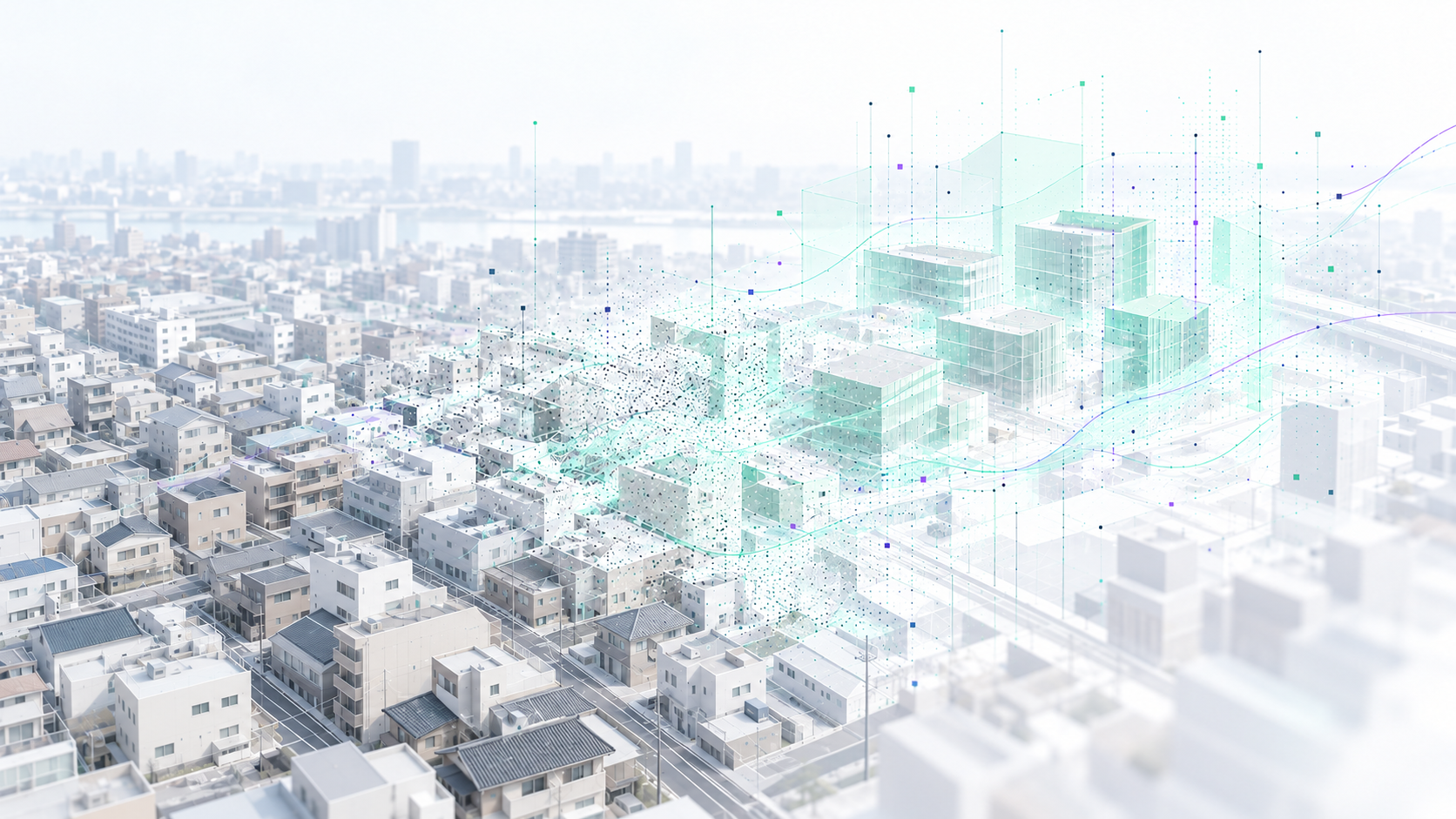
Land Creation uses our proprietary land analysis system to identify adjacent parcels outside the listed property market that could gain development value if assembled, then creates new development sites through negotiations with landowners.
What is Land Creation?
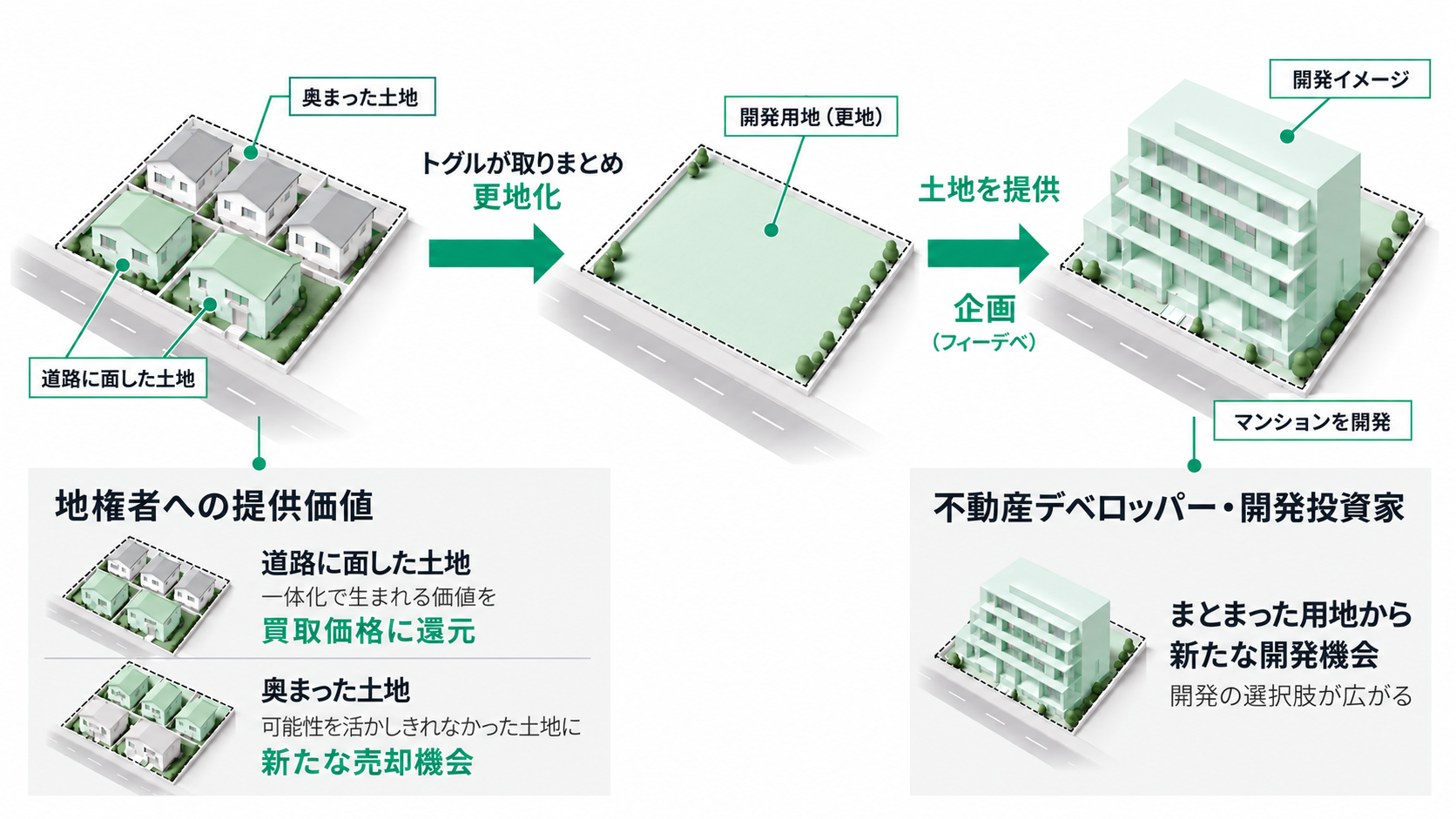
Land Creation assembles multiple parcels to create new development opportunities. We analyze land outside the listed market, identify sites with strong potential, plan how to unlock their value and sell them to developers and development investors. Landowners gain new options for use or sale, developers gain redevelopment opportunities, and we create value for the next generation of cities.
The opportunity is not yet visible as data
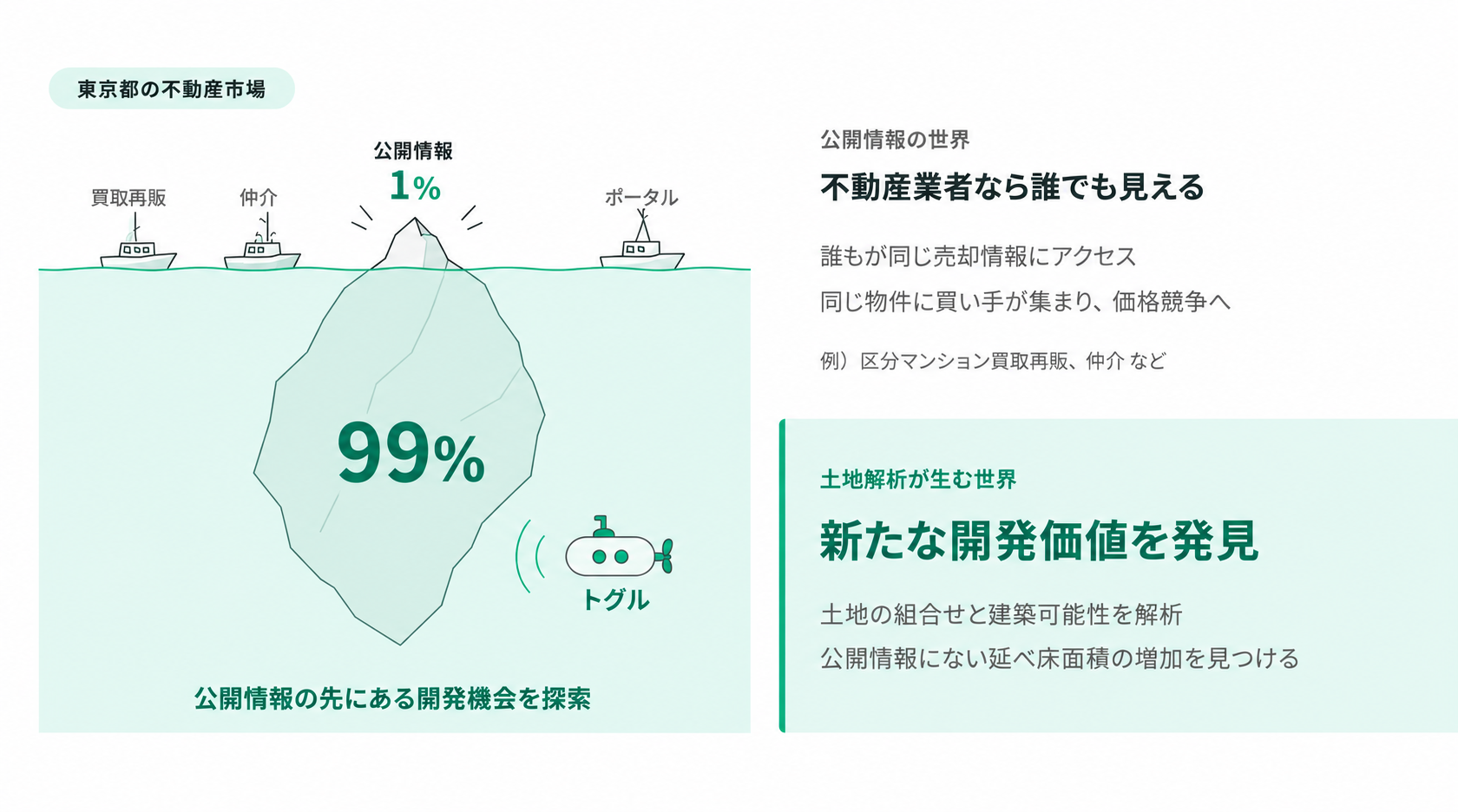
Competition is limited because these opportunities do not exist as visible information without analysis.
Two barriers no one had turned into a business
We can analyze the 99% of land information that is not publicly listed.
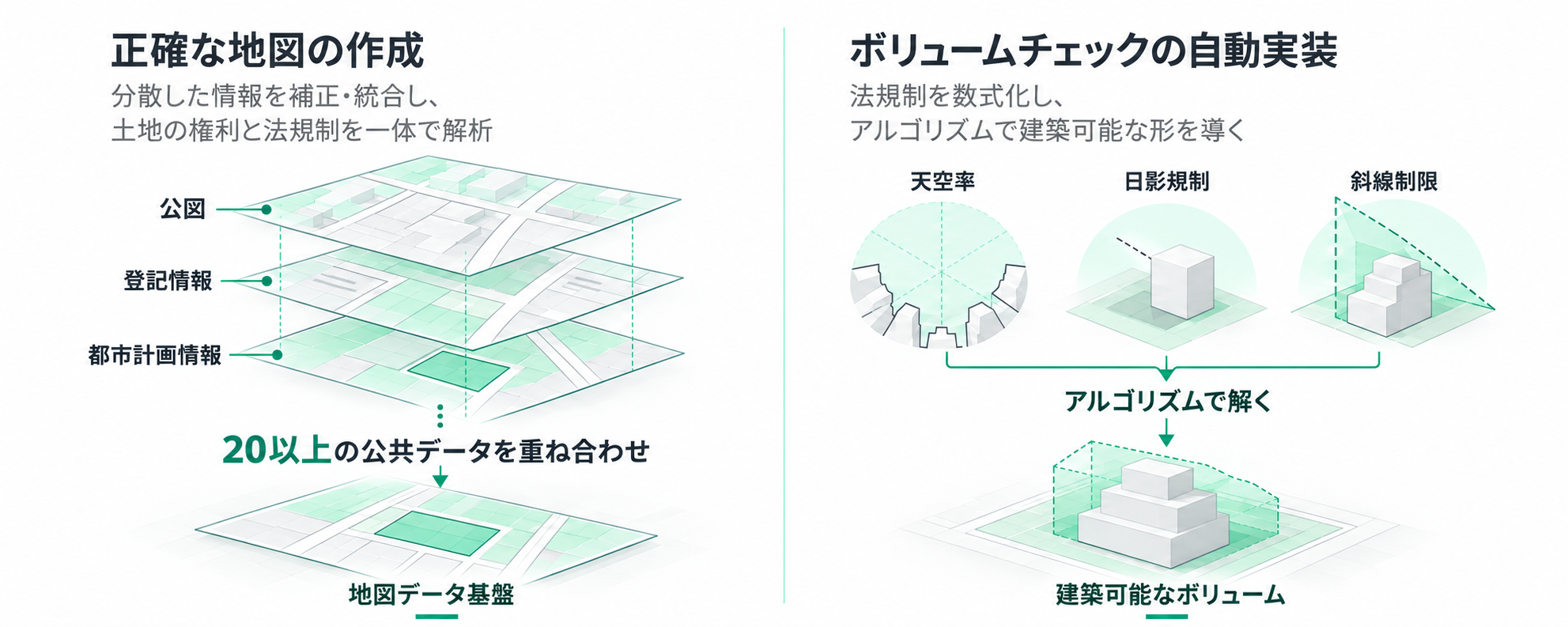
By creating accurate maps and automating building volume checks, we made comprehensive land analysis possible.
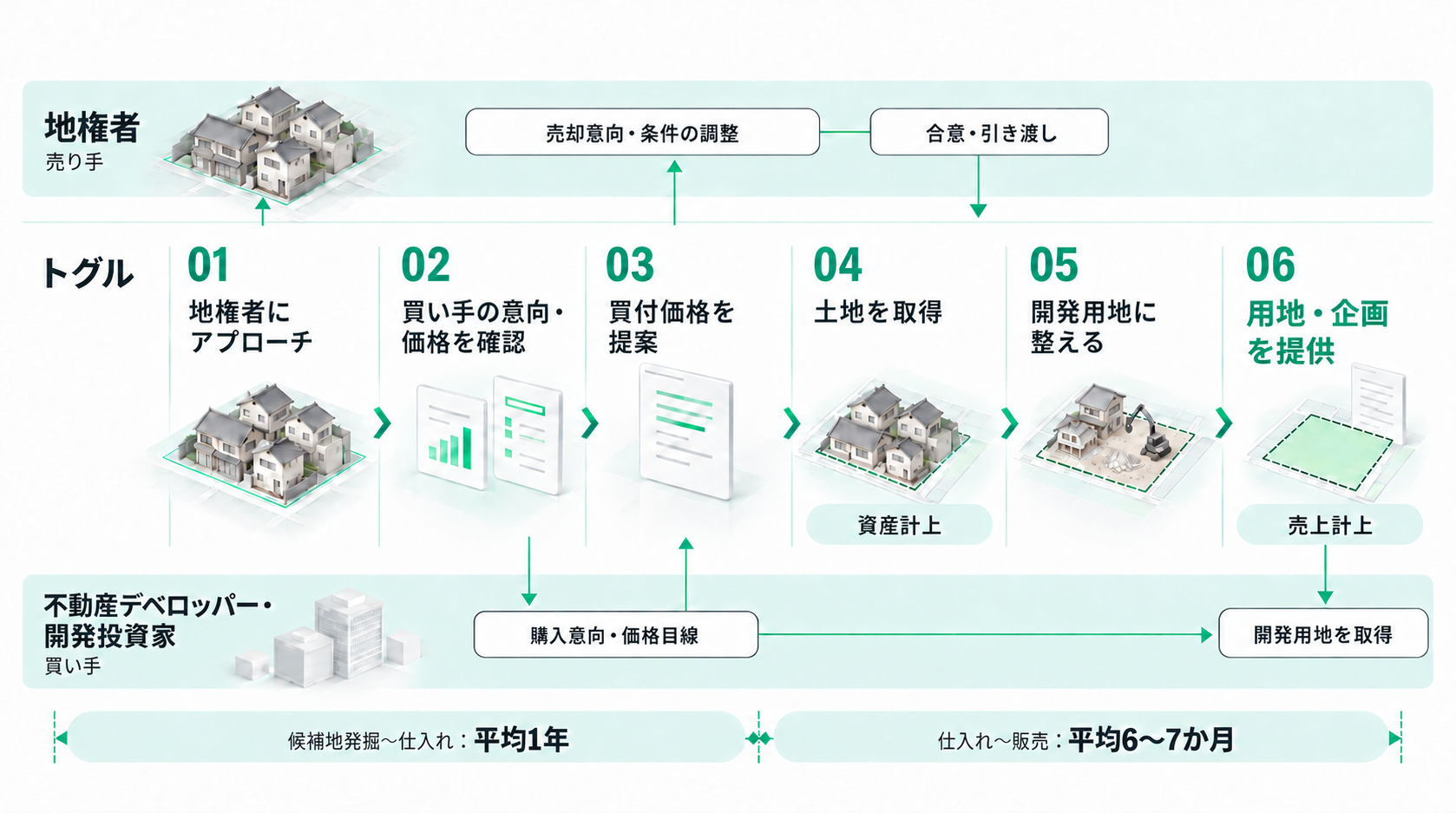
Six-step business flow
This is the business flow after land analysis.
We work with sellers (landowners) and buyers (developers and development investors) in parallel, confirming the exit price before acquiring land.
We prepare acquired land as a development site and sell it with a development plan.
Turning sales activity into a repeatable process
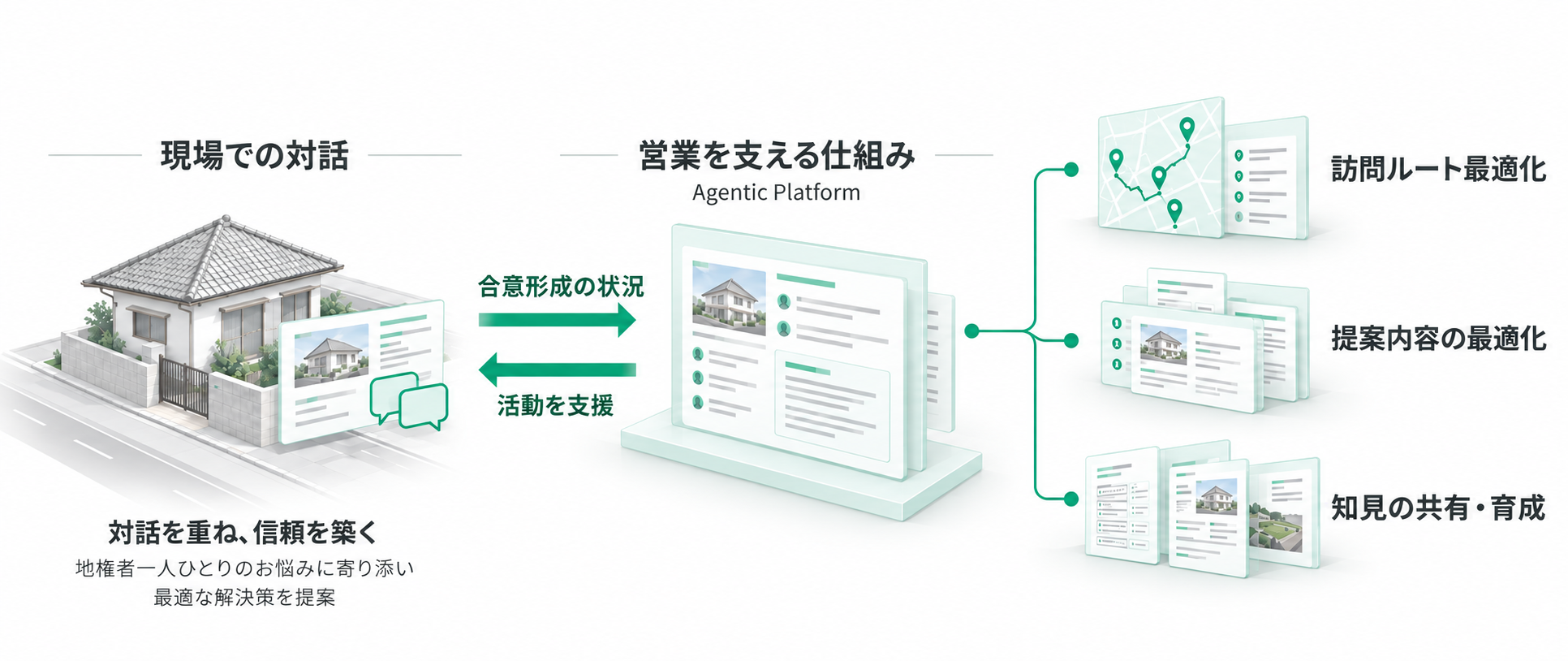
Finding candidate sites alone does not enable scale if negotiations with landowners remain dependent on individuals.
Internal tools, including Agentic Platform, make sales activity and case management visible and analyzable, allowing software to take on work previously dependent on individuals.
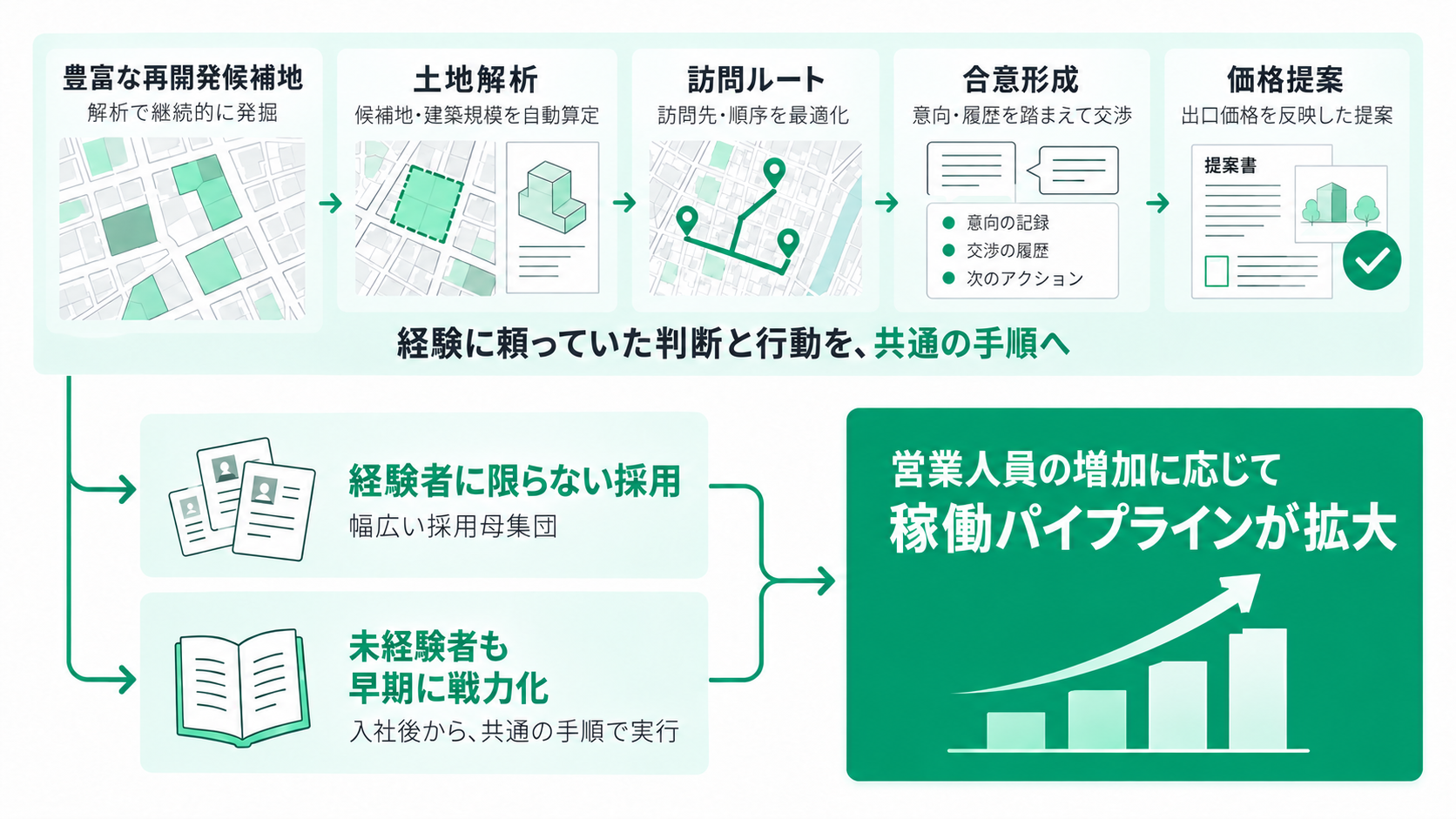
From a business dependent on experience to one that scales with its team.
Technology alone and sales capability alone cannot achieve this. Together, they transform real estate redevelopment, which had been difficult to scale because it depended on each person's experience,
into a repeatable business model in which the active pipeline can grow with the sales team.
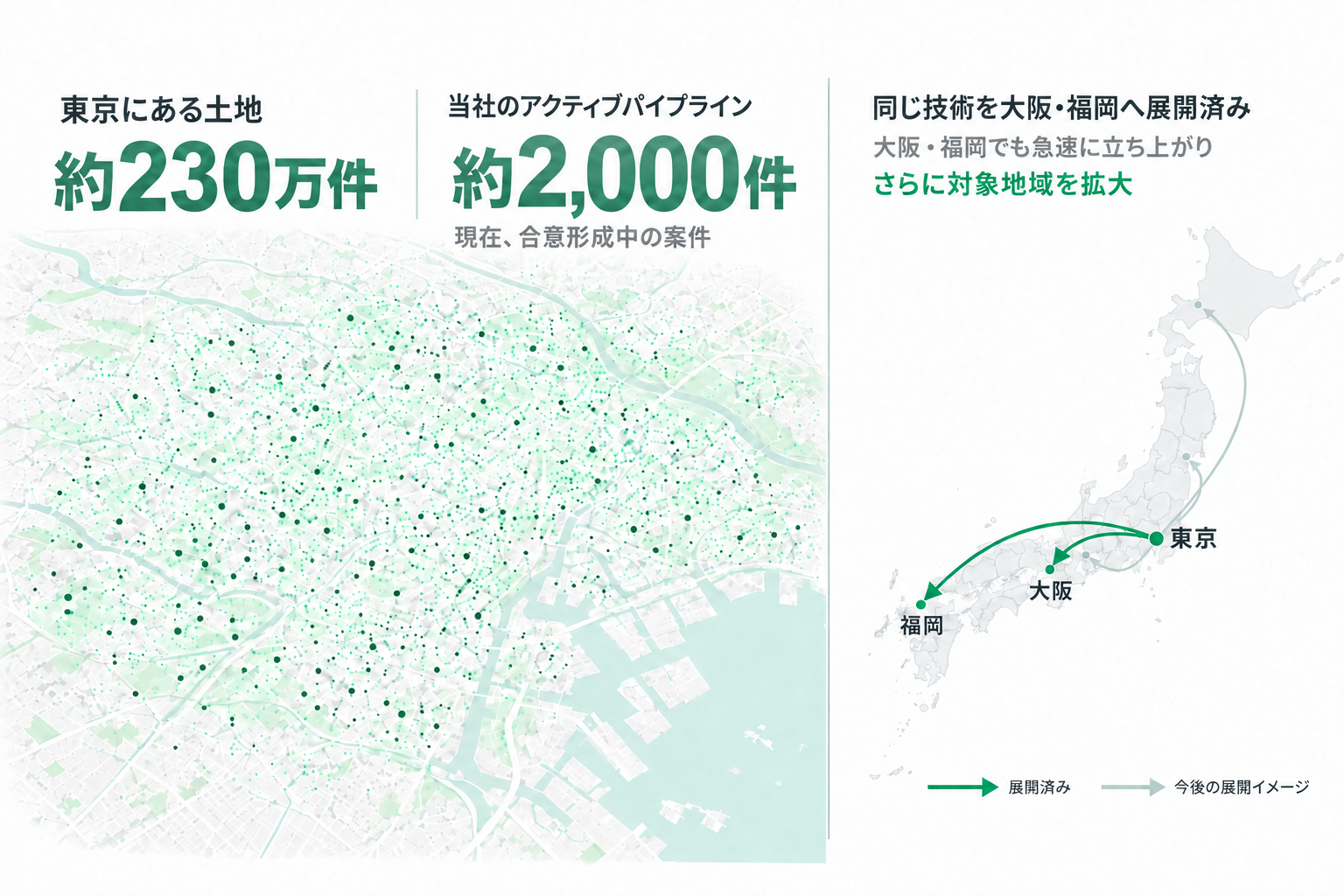
Expanding from Tokyo to other major cities
Land Creation has substantial room for expansion. As our sales team grows, we will advance opportunities at sites where work has not yet begun or progress has stalled.
We can also expand beyond our current Tokyo metropolitan, Osaka and Fukuoka operations to other locations.
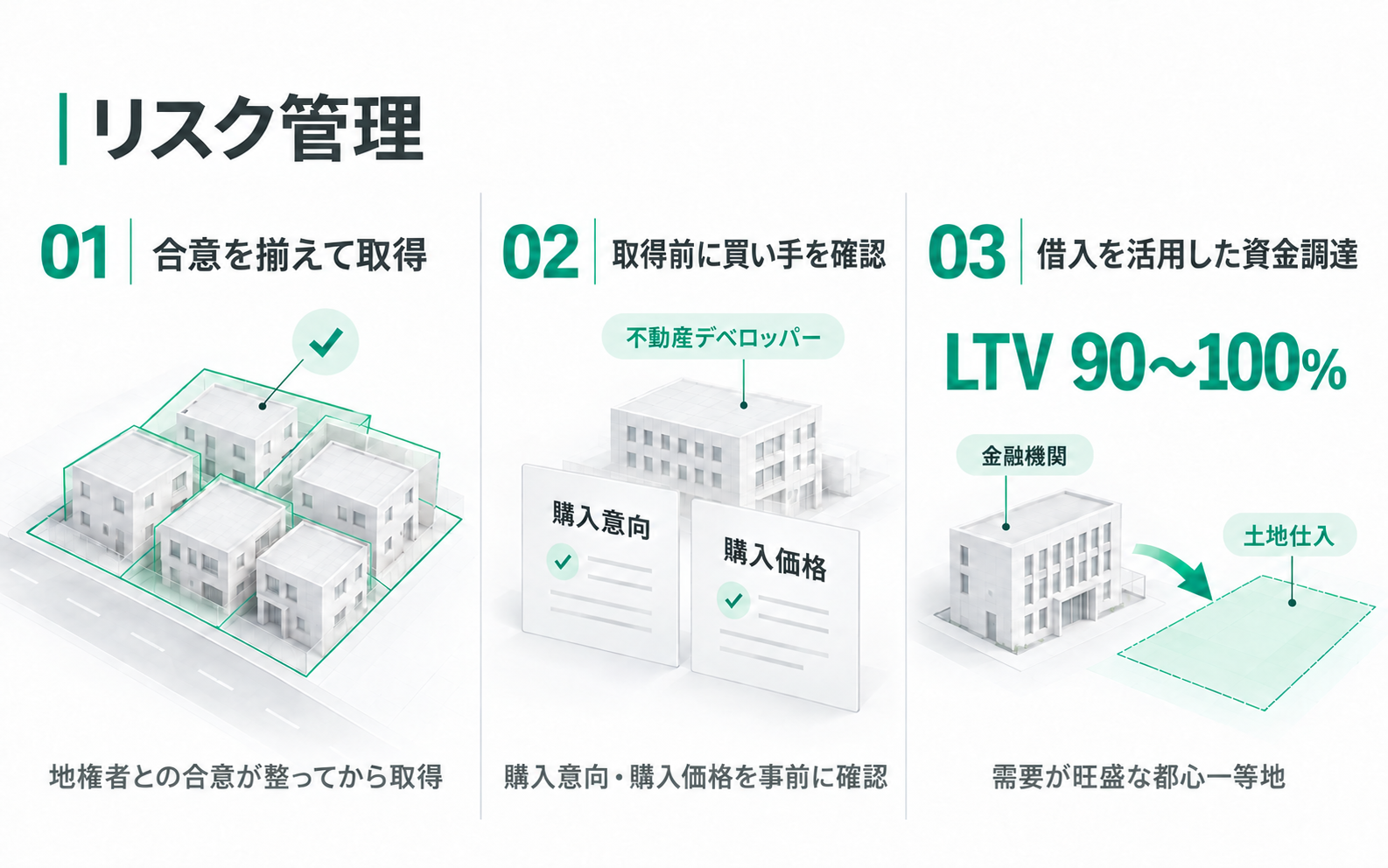
Risk management
Because this business acquires land, inventory is unavoidable. We use consistent acquisition criteria to limit the risk of holding it.
IRInvestor Relations
About toggle
A world
only we can see.
Potential development sites
that others cannot find.
Land Creation uses our proprietary land analysis system to identify adjacent parcels outside the listed property market that could gain development value if assembled, then creates new development sites through negotiations with landowners.
What is Land Creation?
Land Creation assembles multiple parcels to create new development opportunities. We analyze land outside the listed market, identify sites with strong potential, plan how to unlock their value and sell them to developers and development investors. Landowners gain new options for use or sale, developers gain redevelopment opportunities, and we create value for the next generation of cities.
The opportunity is not yet visible as data
Competition is limited because these opportunities do not exist as visible information without analysis.
Two barriers no one had turned into a business
We can analyze the 99% of land information that is not publicly listed.
By creating accurate maps and automating building volume checks, we made comprehensive land analysis possible.
Six-step business flow
This is the business flow after land analysis.
We work with sellers (landowners) and buyers (developers and development investors) in parallel, confirming the exit price before acquiring land.
We prepare acquired land as a development site and sell it with a development plan.
Turning sales activity into a repeatable process
Finding candidate sites alone does not enable scale if negotiations with landowners remain dependent on individuals.
Internal tools, including Agentic Platform, make sales activity and case management visible and analyzable, allowing software to take on work previously dependent on individuals.
From a business dependent on experience to one that scales with its team.
Technology alone and sales capability alone cannot achieve this. Together, they transform real estate redevelopment, which had been difficult to scale because it depended on each person's experience,
into a repeatable business model in which the active pipeline can grow with the sales team.
Expanding from Tokyo to other major cities
Land Creation has substantial room for expansion. As our sales team grows, we will advance opportunities at sites where work has not yet begun or progress has stalled.
We can also expand beyond our current Tokyo metropolitan, Osaka and Fukuoka operations to other locations.
Risk management
Because this business acquires land, inventory is unavoidable. We use consistent acquisition criteria to limit the risk of holding it.